Most sports betting books sell a system. The eight below don't. They explain how a betting line is built, why the book's margin beats nearly everyone, and what the few people who win do differently: shop for the best price, size each bet to the edge, and judge themselves on the closing line instead of last weekend. We read them for the arithmetic, and that's how they're ranked: by how much each one changes the way you price and size a bet.
If you only buy one, buy The Logic of Sports Betting. If you bet player props, add Weighing the Odds in Sports Betting. Everything else depends on what you bet and where you're stuck.
The best sports betting books at a glance
| Book | Best for | Level |
|---|---|---|
| 1. The Logic of Sports Betting (Miller & Davidow) | How lines are made, moved and beaten | Beginner to sharp |
| 2. Weighing the Odds in Sports Betting (Yao) | Props, hedges, middles, fair odds | Intermediate |
| 3. Sharp Sports Betting (Wong) | Parlays, teasers, key numbers | Beginner |
| 4. Squares & Sharps, Suckers & Sharks (Buchdahl) | Luck vs skill, market efficiency | Intermediate |
| 5. Fortune's Formula (Poundstone) | The Kelly criterion and bet sizing | Any |
| 6. Thinking in Bets (Duke) | Tilt, resulting, decisions under uncertainty | Any |
| 7. Trading Bases (Peta) | Betting MLB with a model | Any |
| 8. Conquering Risk (Feustel & Howard) | Building and trusting a model | Advanced |
1. The Logic of Sports Betting
Ed Miller wrote poker books before this; Matthew Davidow bets sports for a living. Their book is the clearest account in print of how the betting market actually works. A handful of market-making books take big bets from sharp players and move their numbers on that information; most retail books copy those numbers and protect themselves by limiting anyone who beats them. Once you see the market that way, the rest follows: why the price at kickoff is the best estimate anyone has, why beating the closing line is the only quick test of skill, and why the softest numbers sit in the markets the retail books price themselves: player props, alternate lines and same-game parlays.
What to take from it: stop asking "who wins?" and start asking "is this price wrong, and by how much?" Our prop odds and edge calculator does the second half of that question for you. Miller and Davidow's follow-up, Interception (2023), goes further into modern prop and parlay pricing.
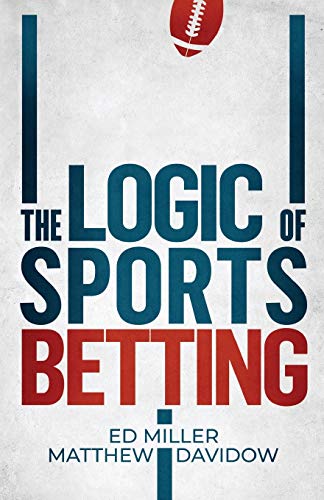
The Logic of Sports Betting
Why a few market-making books set the prices everyone else copies, why the retail books limit winners, and why the closing line is the scoreboard that matters. The one book to read first.
2. Weighing the Odds in Sports Betting
King Yao traded options before he bet sports, and the book reads like it: every idea comes with the numbers. It covers turning odds into an implied chance, working out the book's hold, taking the vig out to get a fair price, hedging, middles, and pricing a prop from a projection of the player's stat line.
What to take from it: a prop is a forecast with a price on it. If your chance of the over isn't higher than the break-even the price implies (53.5% at -115), there's no bet, however good the matchup looks. That's the whole idea behind our NBA player prop strategy guide.
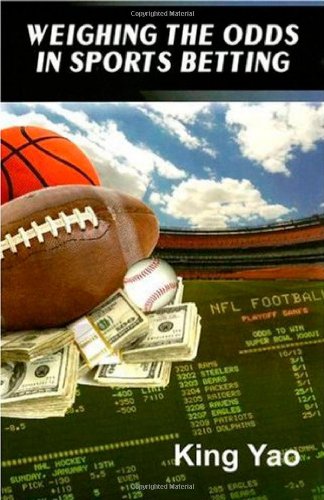
Weighing the Odds in Sports Betting
An options trader works through the arithmetic: implied chance, the hold, fair odds, hedging, middles and pricing a prop from a projection. The closest thing to a textbook for prop bettors.
3. Sharp Sports Betting
Stanford Wong's book is where the Wong teaser comes from: a six-point NFL teaser that moves an underdog of +1.5 to +2.5 or a favorite of -7.5 to -8.5 across both 3 and 7, the two numbers games land on most. Beyond the teaser it's a patient walk through moneylines, parlays, pushes and key numbers, each with its break-even worked out.
What to take from it: every bet type has a break-even, and most parlay and teaser menus are priced well above it. Know the number before you bet the product. Some lines in it are dated; the arithmetic isn't.
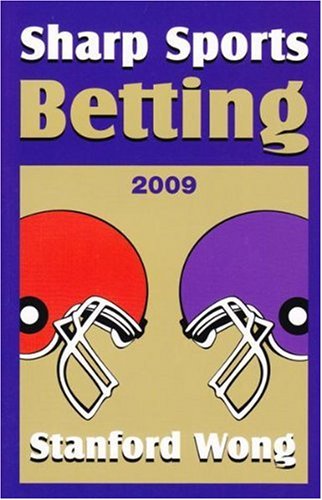
Sharp Sports Betting
The book that named the "Wong teaser". Moneylines, parlays, teasers, pushes and key numbers, each with the break-even worked out. Older lines, timeless arithmetic.
4. Squares & Sharps, Suckers & Sharks
Joseph Buchdahl spends his time testing betting systems against data, and this book is the result: how efficient the betting markets really are, how many bets a record needs before it says anything about skill, and the habits of mind (seeing patterns in noise, remembering wins, explaining away losses) that keep most bettors losing.
What to take from it: a 55% season over 100 bets proves very little. Track your bets with the price you took and the closing price, and judge yourself on the gap. Our prop bet tracker does that sum and runs the luck test for you.
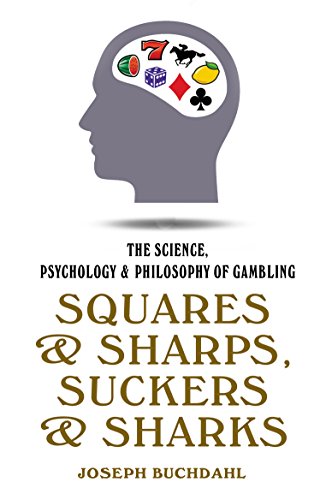
Squares & Sharps, Suckers & Sharks
How efficient betting markets are, how long a record has to run before it means anything, and the biases that keep most bettors losing. Read it before you trust your own win rate.
5. Fortune's Formula
William Poundstone's book tells the story of the Kelly criterion: John Kelly's 1956 formula at Bell Labs, Claude Shannon and Ed Thorp taking it to the blackjack tables and then the markets, and the economists who argued it was wrong. It isn't a betting manual, but no other book makes the core point so well: an edge bet too big still goes broke.
What to take from it: size each bet to the edge, and bet a fraction of what full Kelly says, because your edge is an estimate. Our Kelly criterion guide and bet sizing calculator put numbers on it.
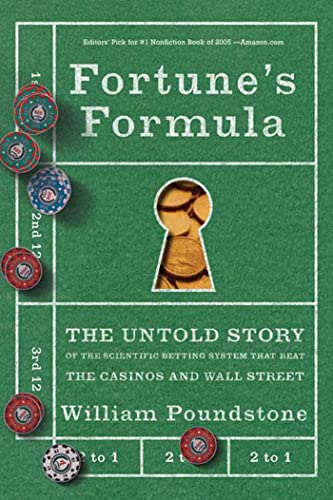
Fortune's Formula
Claude Shannon, John Kelly and Ed Thorp, and the bet-sizing formula they took from Bell Labs to the casinos and Wall Street. A story, not a manual, and the best explanation of why over-betting ruins a winner.
6. Thinking in Bets
Annie Duke played poker for a living, and her book is about one mistake: resulting, judging a decision by how it turned out. A good bet that loses is still a good bet; a bad bet that wins is still a bad one. Bettors who can't tell the two apart chase losses, double up after a bad beat, and drop a sound method after a cold week.
What to take from it: before you change anything after a losing run, ask whether the bets were good at the price you took. Our guides to tilt and surviving a losing streak start from the same idea.
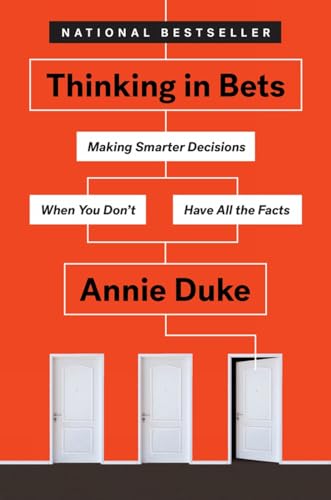
Thinking in Bets
A former poker pro on "resulting": judging a bet by how it turned out instead of how it was made. The cure for chasing losses and doubling up after a bad beat.
7. Trading Bases
Joe Peta left Wall Street, built a model of Major League Baseball and bet a full season with it. The book follows that season and the reasoning behind it: run differential over win-loss record, his idea of cluster luck (teams whose hits happen to bunch into runs), and why a team's record lies more than its underlying numbers.
What to take from it: in MLB the price is the product, and small edges on moneylines and run lines add up only over hundreds of bets. Our run line vs moneyline guide and MLB underdog strategy are the place to start.
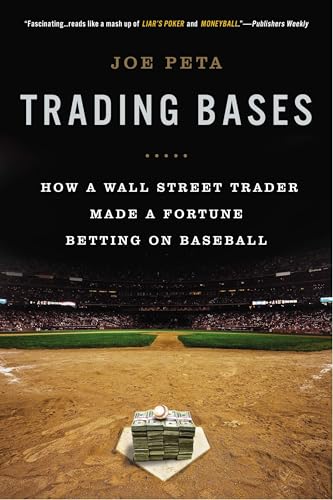
Trading Bases
A Wall Street trader builds a model of baseball, run differential and "cluster luck" included, and bets a full season with it. The most readable account of betting MLB as a market.
8. Conquering Risk
Elihu Feustel bets sports professionally; George Howard was a psychology professor at Notre Dame. Their book is about building a statistical model, testing it honestly, and managing the risk of betting on it. Most of it is sports, with chapters on the stock market. It's the most technical book here and the least necessary for a casual bettor.
What to take from it: a model is only as good as its test on games it never saw. If you can't say how your numbers did out of sample, you don't know your edge yet.
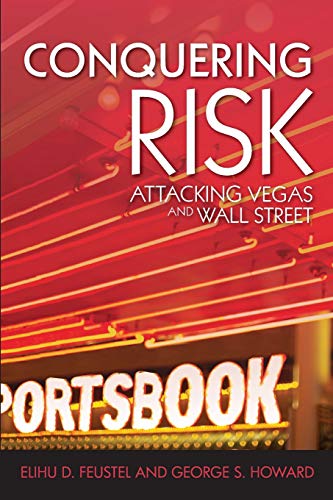
Conquering Risk
A professional sports bettor and a Notre Dame professor on building statistical models and managing the risk of betting on them, sports first, with a detour through the stock market.
Which book for which bettor
- New to betting: Sharp Sports Betting, then The Logic of Sports Betting.
- Player props: Weighing the Odds in Sports Betting, then The Logic of Sports Betting.
- Bankroll and bet sizing: Fortune's Formula, then Squares & Sharps.
- Tilt and chasing losses: Thinking in Bets.
- Baseball: Trading Bases.
- Building a model: Conquering Risk, after Squares & Sharps.
What no betting book will do
No book makes a bet worth placing. They teach you to price a line and size a stake; the edge still has to come from you, one price at a time, and most bettors never find a lasting one. Bet only where it's legal for you and only money you can afford to lose. If betting stops being fun, call or text the National Problem Gambling Helpline at 1-800-MY-RESET (1-800-697-3738), free and confidential.
Want the arithmetic now instead of after 300 pages? Our free tools do it in your browser: prop odds and edge, bet sizing and losing streaks, and the bet tracker with closing line value.
Comments
No comments yet. Be the first to comment!
Leave a Comment